The top ten foundries grew revenues 7.9% to $28.29 billion, and Q4 revenues could grow faster, reports TrendForce.

TSMC, with 58% market share, grew Q3 revenue by 10.2%—reaching $17.25 billion. The 3nm process alone contributed 6% to TSMC’s Q3 revenue, with advanced processes (≤7nm) accounting for nearly 60% of its total revenue.
Samsung grew foundry revenue by 14.1% to $3.69 billion in Q3, driven by orders for Qualcomm’s mid-to-low range 5G AP SoC, 5G modems, and mature 28 nm OLED DDI processes.
GlobalFoundries maintained a stable performance in Q3, with its revenue approximating $1.85 billion, similar to the previous quarter.
UMC’s Q3 revenue declined 1.7% to $1.8 billion. Revenue from its 28/22 nm products saw a near 10% increase, representing 32% of UMC’s total revenue.
SMIC had a 3.8% Q3 revenue increase to $1.62 billion. However, the revenue share from American clients decreased to 12.9%. Conversely, revenue from Chinese clients increased to 84% due to the government’s localisation initiatives and urgent orders for smartphone components.
Notable changes in the rankings from sixth to tenth position include VIS and IFS, with the latter entering the global top ten for the first time since Intel’s financial restructuring.
VIS’ Q3 revenue increased by 3.8% to $333 million—surpassing PSMC to take the eighth position.
IFS had a 34.1% increase in revenue to approximately $311 million.
HuaHong saw a 9.3% decrease in Q3 revenue to about $766 million.
HHGrace maintained steady wafer shipment levels from the previous quarter, but a roughly 10% decrease in ASP led to a decline in revenue.
Tower Semiconductor saw stable demand in the smartphone, automotive, and industrial sectors, maintaining revenue at around $358 million in Q3.
PSMC witnessed a 7.5% drop in revenue to $305 million, with PMIC and Power Discrete revenues declining nearly 10% and 20%, respectively, impacting overall performance.


Stay up to date with the latest in industry offers by subscribing us. Our newsletter is your key to receiving expert tips.

As the memory chip shortage is expected to persist through 2027, independent smartphone and laptop manufacturers are being forced to redesign products, screen incoming chips for counterfeit or substan
Yageo posted year-over-year and month-over-month revenue growth in August, extending its streak of record monthly highs to a sixth straight month. The passive components maker said strong AI-related d
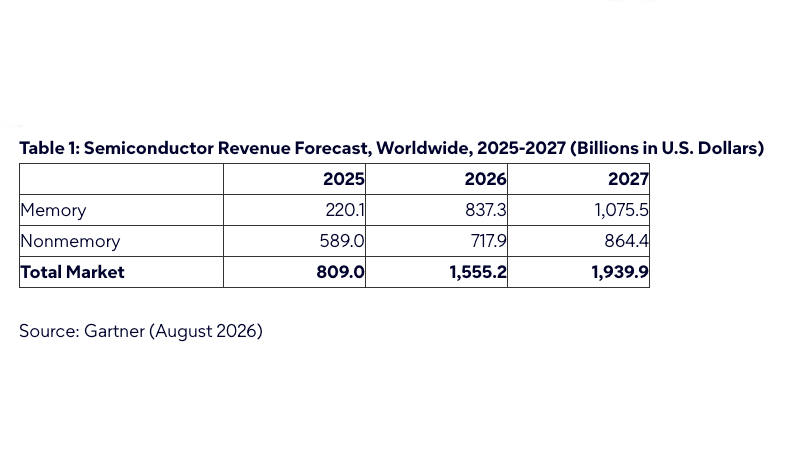
Gartner's latest forecast shows that "global semiconductor revenue is expected to reach US$1.555 trillion in 2026, up 92% from US$809 billion in 2025, and is projected to increase further to US$1.


