The RAN market is headed down, says Dell’Oro.
Following the >40% rise between 2017 and 2021, RAN revenues stabilised in 2022, and are on target to decline sharply in 2023.
Market conditions are expected to remain challenging in 2024 as the Indian RAN market pulls back, though the pace of the global decline this year and for the remainder of the forecast period should be more moderate.
“MBB (Mobile Broadband)-based investments are now slowing and the upside with new growth areas including FWA and private wireless is still too small to change the trajectory,” says Dell’Oro vp Stefan Pongratz, “also weighing on the MBB market is the fact that the upper mid-band capacity boost is rather significant relative to current data traffic growth rates in some markets, which could impact the timing for capacity upgrades.”.
Worldwide RAN revenues are projected to decline at a 1% CAGR over the next five years.
AsiaPac is expected to lead the decline, while easier comparisons following steep contractions in 2023 will improve the growth prospects in the North America region.
5G-Advanced is expected to play an important role in the broader 5G journey, however, it is not expected to fuel another major capex growth cycle.
TRAN segments that are expected to grow over the next five years include: 5G NR, FWA, mmWave, Massive MIMO, Open RAN, private wireless, small cells, and Virtualized RAN.
Ericsson CEO B?rje Ekholm says the telcos’ mobile infrastructure investments are “unsustainably low”.


Stay up to date with the latest in industry offers by subscribing us. Our newsletter is your key to receiving expert tips.

As the memory chip shortage is expected to persist through 2027, independent smartphone and laptop manufacturers are being forced to redesign products, screen incoming chips for counterfeit or substan

Yageo posted year-over-year and month-over-month revenue growth in August, extending its streak of record monthly highs to a sixth straight month. The passive components maker said strong AI-related d
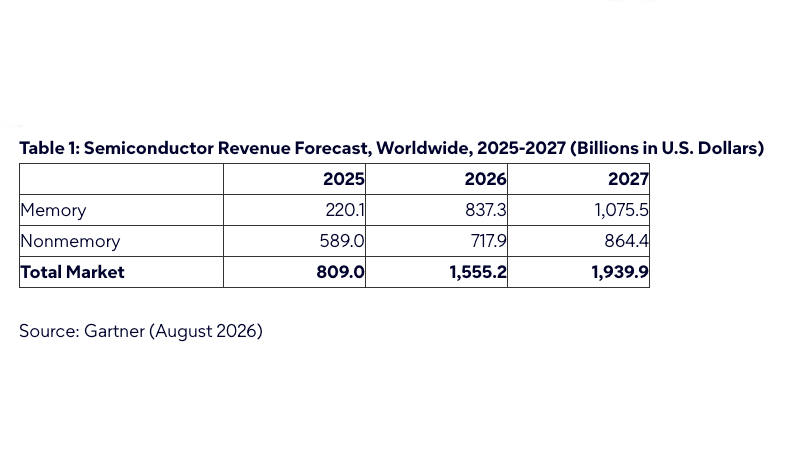
Gartner's latest forecast shows that "global semiconductor revenue is expected to reach US$1.555 trillion in 2026, up 92% from US$809 billion in 2025, and is projected to increase further to US$1.


