China’s key factory activity gauge closed the year with a contraction for a third straight month, suggesting that the world’s second-biggest economy may need more policy support to accomplish Beijing’s economic stabilisation goals in 2024.December’s official manufacturing purchasing managers’ index (PMI) fell to 49 from November’s 49.4, according to data from the National Bureau of Statistics released on Sunday.
This was much worse than the median forecast for 49.5 in a Reuters poll, as China’s first post-Covid year ended with a weaker-than-expected recovery.Earlier this year, PMI readings fell for five months in a row starting in April. After a brief expansion in September, they started falling again in October.
A reading above 50 typically indicates expansion of activity, while a reading below that suggests a contraction.
The statistics bureau pointed to an “increasingly complicated, tough and uncertain” external environment as a key reason for the continued fall.


Stay up to date with the latest in industry offers by subscribing us. Our newsletter is your key to receiving expert tips.

As the memory chip shortage is expected to persist through 2027, independent smartphone and laptop manufacturers are being forced to redesign products, screen incoming chips for counterfeit or substan
Yageo posted year-over-year and month-over-month revenue growth in August, extending its streak of record monthly highs to a sixth straight month. The passive components maker said strong AI-related d
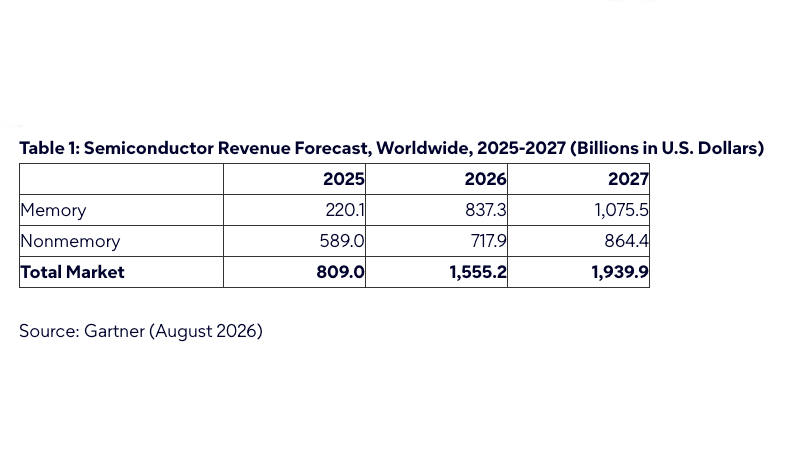
Gartner's latest forecast shows that "global semiconductor revenue is expected to reach US$1.555 trillion in 2026, up 92% from US$809 billion in 2025, and is projected to increase further to US$1.


