The US has also extended the ban to over 40 countries which are seen as likely to buy the chips for re-sale to China.
“Today’s updated rules will increase effectiveness of our controls and further shut off pathways to evade our restrictions. These controls maintain our clear focus on military applications and confront the threats to our national security posed by the PRC Government’s military-civil fusion strategy,” said IS Secretary of Commerce Gina Raimondo.
The ban is seen as particularly affecting Intel, Nvidia, Xilinx and TSMC. Nvidia has told investors its A100, A800, H100, H800, L40, L40S, and RTX 4090 products could cone under the ban.
“The US needs to stop politicizing and weaponizing trade and tech issues and stop destabilizing global industrial and supply chains,” said China’s Foreign Ministry spokesperson Mao Ning.
“Overly broad, unilateral controls risk harming the US semiconductor ecosystem without advancing national security as they encourage overseas customers to look elsewhere,” said the SIA.


Stay up to date with the latest in industry offers by subscribing us. Our newsletter is your key to receiving expert tips.

As the memory chip shortage is expected to persist through 2027, independent smartphone and laptop manufacturers are being forced to redesign products, screen incoming chips for counterfeit or substan
Yageo posted year-over-year and month-over-month revenue growth in August, extending its streak of record monthly highs to a sixth straight month. The passive components maker said strong AI-related d
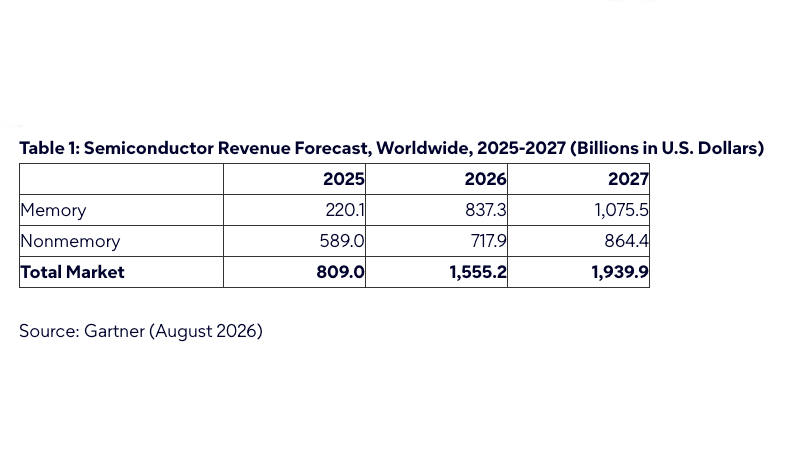
Gartner's latest forecast shows that "global semiconductor revenue is expected to reach US$1.555 trillion in 2026, up 92% from US$809 billion in 2025, and is projected to increase further to US$1.


