“The forces that shape the capex cycle have not changed,” says Dell’Oro vp Stefan Pongratz, “operators can raise capital intensities over the short-term, but there is a reason the trend line has stayed flat over the past 10+ years. Since we are now operating at elevated ratios, capex acceleration remains a transitory phenomenon in a world where neither 4G nor 5G has been able to change the revenue trajectory.”
Global telecom capex is projected to decline at a 2% CAGR over the next three years, as positive growth in India and stable trends in Europe will not be enough to offset steeper capex deceleration in North America.
In the US, the transition towards steady-state conditions will weigh on wireless activity, leading to a 25 to 30% reduction over the next three years.
Given the highly unlikely prospect of a change in the current revenue trajectory and the expectation of flat operator top-line growth, capital intensity ratios are on track to approach 16% by 2025, slightly below the current trendline.


Stay up to date with the latest in industry offers by subscribing us. Our newsletter is your key to receiving expert tips.

As the memory chip shortage is expected to persist through 2027, independent smartphone and laptop manufacturers are being forced to redesign products, screen incoming chips for counterfeit or substan
Yageo posted year-over-year and month-over-month revenue growth in August, extending its streak of record monthly highs to a sixth straight month. The passive components maker said strong AI-related d
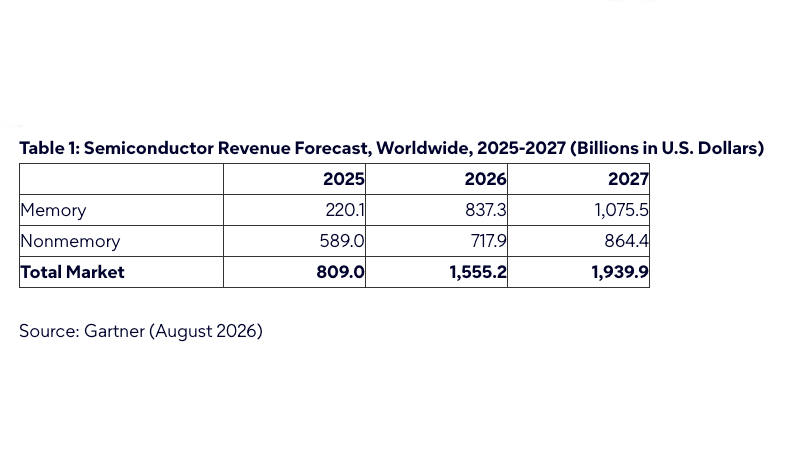
Gartner's latest forecast shows that "global semiconductor revenue is expected to reach US$1.555 trillion in 2026, up 92% from US$809 billion in 2025, and is projected to increase further to US$1.


