Currently there are bloated inventories for components like memory, small case-size ceramic capacitors and automotive MCUs, but FPGAs, analogue ICs, power MOSFETs, MCUs and discretes remain constrained and costly.
In Q3, lead times for all electronic components will reduce compared to Q3 2022 with nearly 60% of component lead times decreasing versus 1% in Q3 22 with none expected to increase compared to 73% in Q3 22.
Despite inventory reductions that will likely be complete by the end of H1, IC orders, wafer starts, and capacity utilisation will begin to rise and memory pricing will reach its bottom in H2. DRAM prices will start to recover in Q3 and NAND pricing will follow in Q4 or early in 2024.


Stay up to date with the latest in industry offers by subscribing us. Our newsletter is your key to receiving expert tips.

As the memory chip shortage is expected to persist through 2027, independent smartphone and laptop manufacturers are being forced to redesign products, screen incoming chips for counterfeit or substan

Yageo posted year-over-year and month-over-month revenue growth in August, extending its streak of record monthly highs to a sixth straight month. The passive components maker said strong AI-related d
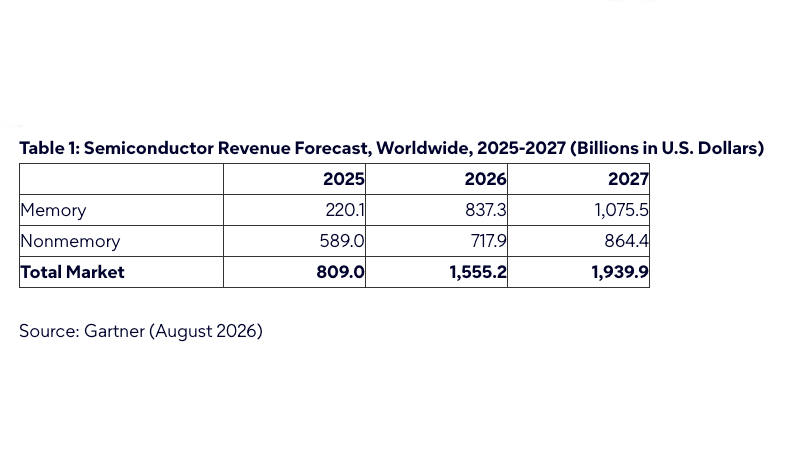
Gartner's latest forecast shows that "global semiconductor revenue is expected to reach US$1.555 trillion in 2026, up 92% from US$809 billion in 2025, and is projected to increase further to US$1.


