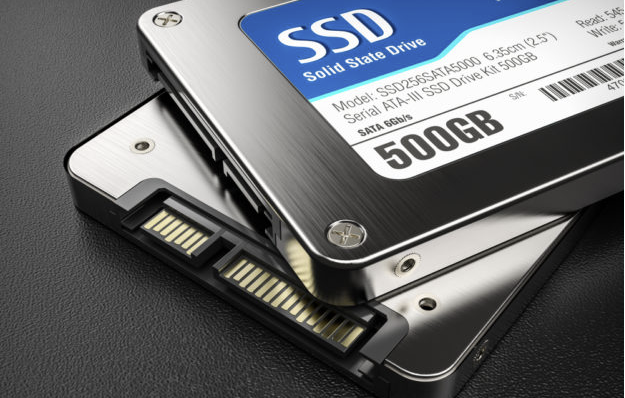
According to a recent report by Nikkei News, the impact of global inflation and other factors has led to a decrease in consumer purchasing power, sluggish demand in the PC market, and a drop in the price of core chip NAND Flash, making the price of SSDs for PCs continue to fall and reach new lows.
According to the report, the wholesale price (bulk price) of TLC 256GB, an SSD indicator product, was around $29.5 each during October-December 2022, down 6% (down $2) compared to the previous quarter (July-September), the fifth consecutive quarterly decline and the third consecutive quarter to set a new record low; a 21% decrease (down $8) compared to the same period last year.
Market research firm Gartner pointed out that the global PC shipments during July-September 2022 fell by 19.5% to 67.996 million units compared with the same period last year, the largest decline in history since the survey began in the mid-1990s, which is a historic slowdown for the PC market.
In addition to weak PC demand, falling NAND Flash prices are also the reason for the continued decline in SSD prices. The price of TLC 256Gb, an indicator NAND Flash product, will be around $2.40 per unit during October-December 2022, down 14% from the previous quarter (July-September).
The report points out that although entering the year-end season, but because of inflation pressures on household consumption, the market is generally expected this winter PC sales fear weak, and storage chip manufacturers began to NAND Flash production reduction measures, but it is estimated that the effect of production cuts will not begin to appear until after the spring of 2023, the current NAND Flash prices are afraid of continued decline, so SSD prices are also afraid of further The current NAND Flash prices are likely to continue to fall, so SSD prices are likely to go down further.
source:xinzhixun


Stay up to date with the latest in industry offers by subscribing us. Our newsletter is your key to receiving expert tips.

As the memory chip shortage is expected to persist through 2027, independent smartphone and laptop manufacturers are being forced to redesign products, screen incoming chips for counterfeit or substan
Yageo posted year-over-year and month-over-month revenue growth in August, extending its streak of record monthly highs to a sixth straight month. The passive components maker said strong AI-related d
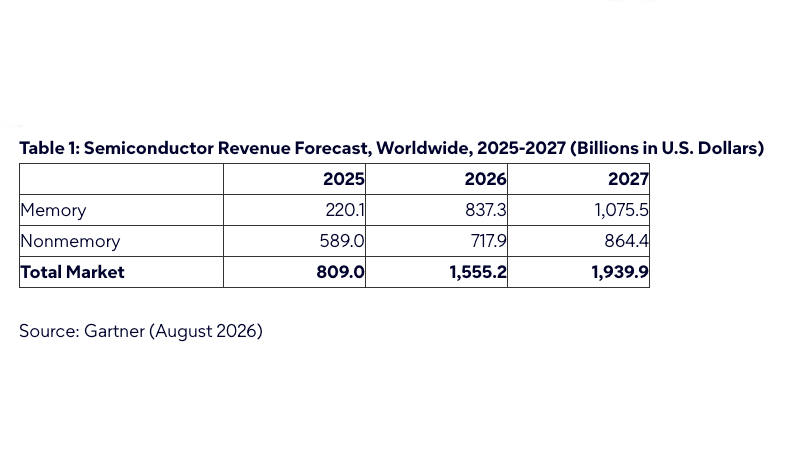
Gartner's latest forecast shows that "global semiconductor revenue is expected to reach US$1.555 trillion in 2026, up 92% from US$809 billion in 2025, and is projected to increase further to US$1.


