NVIDIA has launched its A800 AI GPU, a downgraded version of its A100 and H100 series, to Chinese customers and already has orders in place, according to industry sources, Electronic Times reported.
The U.S. ban on high-end GPU exports to China is said to have affected NVIDIA's A100 and H100 AI chips exported to China, prompting it to launch the lower-spec A800 series to comply with new U.S. control regulations on Chinese exports of advanced chips. The new U.S. export control regulations limit the rate to 600 GB per second and above, and NVIDIA's A800 chips have a data transfer rate of 400 GB per second, down from 600 GB per second in the previous generation.
NVIDIA still needs to obtain a U.S. export license for its A800 series AI GPUs sold in China, the sources said, adding that the processor supplier should be able to start shipping chips to Chinese customers in a few months.
NVIDIA disclosed in early November that the A800 GPU, a replacement for the A100 model, went into production in the third quarter. It also said it met clear tests for the new U.S. regulatory rules.
Sources close to the matter said the 7nm A800 will still be manufactured and packaged by TSMC, with China's Taiwan-based Jinyuan Electronics in charge of test operations and IC test interface solutions to come from Chunghwa Precision Test Technology and Yingwei Technology. TSMC's 7nm capacity utilization has declined recently, and the launch of NVIDIA's A800 GPU may help boost TSMC's 7nm process capacity utilization.
source:aijiwei



Stay up to date with the latest in industry offers by subscribing us. Our newsletter is your key to receiving expert tips.

As the memory chip shortage is expected to persist through 2027, independent smartphone and laptop manufacturers are being forced to redesign products, screen incoming chips for counterfeit or substan

Yageo posted year-over-year and month-over-month revenue growth in August, extending its streak of record monthly highs to a sixth straight month. The passive components maker said strong AI-related d
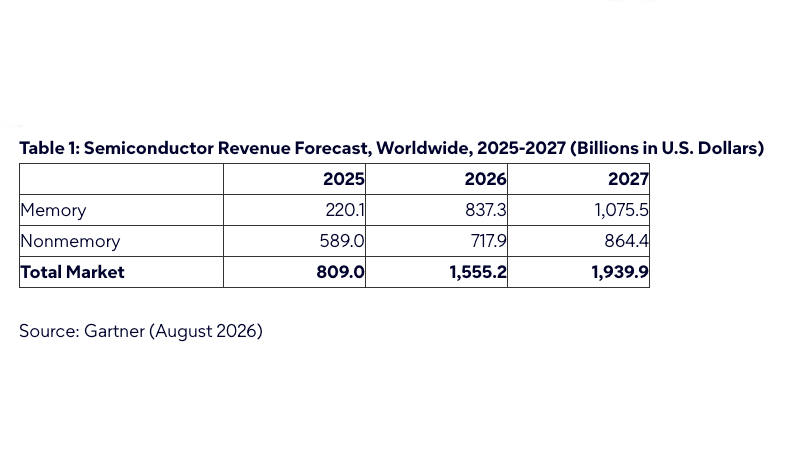
Gartner's latest forecast shows that "global semiconductor revenue is expected to reach US$1.555 trillion in 2026, up 92% from US$809 billion in 2025, and is projected to increase further to US$1.


