September 20, according to South Korean media THEELEC, citing market sources, reported that Samsung Electronics System LSI Division plans to slightly expand OLED DDI (driver chip) production capacity in 2023, and will further secure OLED DDI production capacity for smartphones through a partnership with Taiwan's UMC.
Samsung Electronics' system LSI division is currently the global leader in the OLED DDI market. According to market research firm Omdia, as of Q1 2022, Samsung Electronics' System LSI division has a 55% market share of smartphone OLED DDI, significantly ahead of second-ranked LX Semicon at 14.6% and third-ranked Novatech at 11.6%. Samsung Electronics System LSI Division has such a strong market position, but mainly due to Samsung Electronics and Apple, two of the world's major smartphone manufacturers of large-scale adoption.
The report points out that at this stage, Samsung Electronics System LSI Division 12-inch wafer OLED DDI production line has two, mainly including Samsung foundry department and Taiwan UMC supply. In the UMC part, it uses a 28nm process 12-inch wafer production line, and the line is also used for foundry CMOS image sensors. In addition, Samsung is also actively investing, such as investing in UMC's P6 fab in Taiwan, which is scheduled to come online in 2023, not only to provide mass production equipment for the fab, but also to sign a long-term supply contract with the fab.
Source:xinzhixun


Stay up to date with the latest in industry offers by subscribing us. Our newsletter is your key to receiving expert tips.

As the memory chip shortage is expected to persist through 2027, independent smartphone and laptop manufacturers are being forced to redesign products, screen incoming chips for counterfeit or substan
Yageo posted year-over-year and month-over-month revenue growth in August, extending its streak of record monthly highs to a sixth straight month. The passive components maker said strong AI-related d
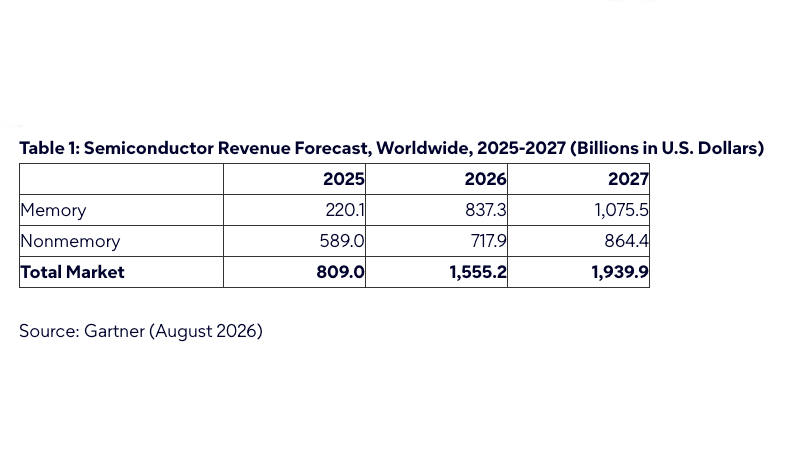
Gartner's latest forecast shows that "global semiconductor revenue is expected to reach US$1.555 trillion in 2026, up 92% from US$809 billion in 2025, and is projected to increase further to US$1.


