South Korea said it aims to increase the share of local enterprises in the global non-storage semiconductors market from 3% to 10% by 2030, reducing the reliance on imported materials, components and equipment from 70% to 50%.

As reported by Business Korea, the government will enlarge the tax break for semiconductor development and infrastructure investment. The tax deduction rate for infrastructure investment for large firms will increase from 6-10% to 8-12%. The government is also looking at establishing a training center for semiconductor engineers this year to provide at least 150,000 people over ten years to bolster the semiconductor labor force.
The government revealed that the volume of semiconductor production hubs would be enhanced from 350% to 490%, increasing the clean room facilities in Pyeongtaek and Yongin from 12 to 18 and 9 to 12, respectively, expecting to create 9,000 jobs.
Additionally, South Korea will also spend 450 billion and 500 billion won on feasibility studies on the development of power and auto chips from 2024 to 2030, 1.25 trillion won to develop artificial intelligence chips in the next seven years, and 1.5 trillion won to invest in 30 promising fabless semiconductor companies.
Source from ijiwei


Stay up to date with the latest in industry offers by subscribing us. Our newsletter is your key to receiving expert tips.

As the memory chip shortage is expected to persist through 2027, independent smartphone and laptop manufacturers are being forced to redesign products, screen incoming chips for counterfeit or substan
Yageo posted year-over-year and month-over-month revenue growth in August, extending its streak of record monthly highs to a sixth straight month. The passive components maker said strong AI-related d
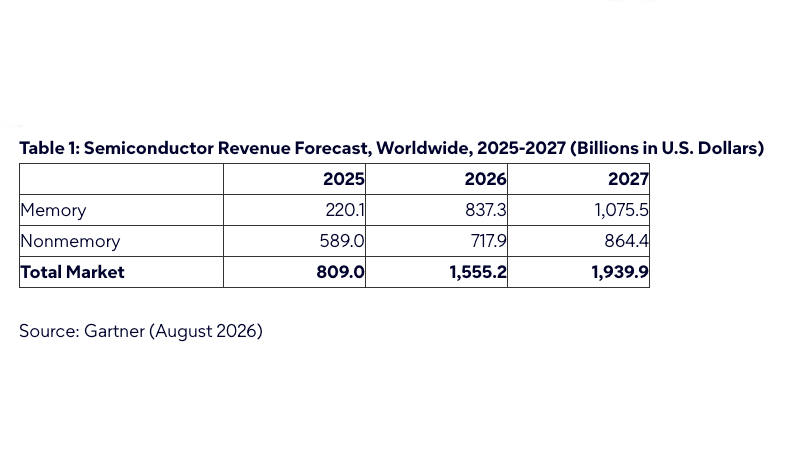
Gartner's latest forecast shows that "global semiconductor revenue is expected to reach US$1.555 trillion in 2026, up 92% from US$809 billion in 2025, and is projected to increase further to US$1.


