The World Semiconductor Trade Statistics Association grew 26.2 percent in 2021 (WSTS) expects the global semiconductor market to grow 16.3 percent to $646 billion in 2022 and continue to grow 5.1 percent in 2023 to $680 billion, according to foreign media reports.
During the pandemic, more and more people work and study from home, leading to increased global demand for various semiconductor products, such as chips used in smartphones and computers, but semiconductor products are in short supply.Industries, including cars, mobile phones, game consoles and PC, have been affected by the global semiconductor supply shortage.
In addition, semiconductor has become an integral part of modern cars, it is in the aspect of engine management, temperature control, car entertainment and collision safety play a positive role, but the global supply shortage of Toyota, Honda, Volkswagen, ford, Fiat Chrysler and nissan brands were forced to cut production, even forced to stop production.
Strong demand for semiconductor products has driven growth in the semiconductor market.WSTS predicts that chip demand will continue to be strong, with most major categories expected to see higher year-over-year growth in 2022.
Source:TechWeb


Stay up to date with the latest in industry offers by subscribing us. Our newsletter is your key to receiving expert tips.

As the memory chip shortage is expected to persist through 2027, independent smartphone and laptop manufacturers are being forced to redesign products, screen incoming chips for counterfeit or substan

Yageo posted year-over-year and month-over-month revenue growth in August, extending its streak of record monthly highs to a sixth straight month. The passive components maker said strong AI-related d
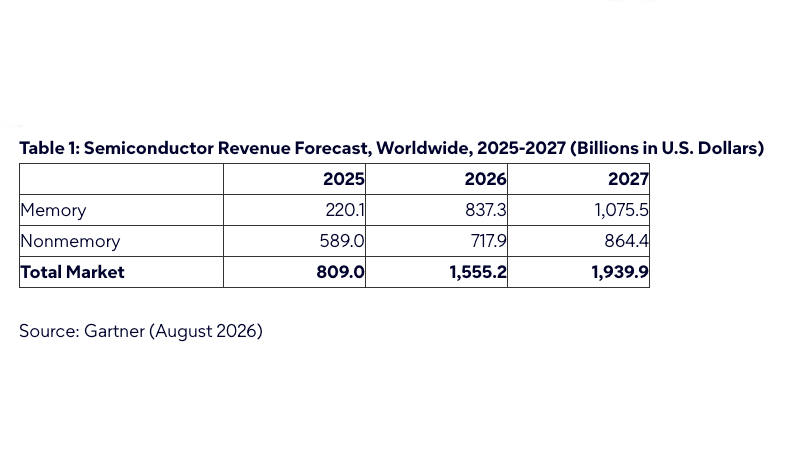
Gartner's latest forecast shows that "global semiconductor revenue is expected to reach US$1.555 trillion in 2026, up 92% from US$809 billion in 2025, and is projected to increase further to US$1.


