Toshiba’s initial focus since going private on Wednesday will be on PMICs and making a ten percent operating profit, said CEO Taro Shimada (pictured) earlier today.
“In the short-term, expanding sales of power semiconductors is the first thing Toshiba should do,” said Shimada, “we’d like to ramp up the capacity as early as possible. Power semiconductors are selling like hotcakes because of strong demand for EVs.”Earlier this month Toshiba and Rohm announced a hook-up in PMICs.
Costs imposed by debt for the buy-out mean cost-cutting measures are needed and its four business units – energy, infrastructure, digital solutions and electronic devices – will consolidated and back-office efficiencies implemented.
Shimada said he expects the operating margin target of 10% to be achieved “early.”
“The issue with Toshiba was that it was unable to make any decisions and move forward,” Shimada said.
Shimada sees the data streams generated by Toshiba’s infrastructure businesses – power plants, trains, elevators, retail point-of-sales systems and water treatment systems – as the basis for initiating digital services revenue streams
“Once we are able to monetise the data from our equipment, profitability will easily surpass 10%,” Shimada said.
Shimada, a former Siemens exec, said that climate-related technologies like bendable solar panels, carbon capture systems, measuring industrial emissions and next-generation nuclear power technologies are longer term opportunities.


Stay up to date with the latest in industry offers by subscribing us. Our newsletter is your key to receiving expert tips.

As the memory chip shortage is expected to persist through 2027, independent smartphone and laptop manufacturers are being forced to redesign products, screen incoming chips for counterfeit or substan
Yageo posted year-over-year and month-over-month revenue growth in August, extending its streak of record monthly highs to a sixth straight month. The passive components maker said strong AI-related d
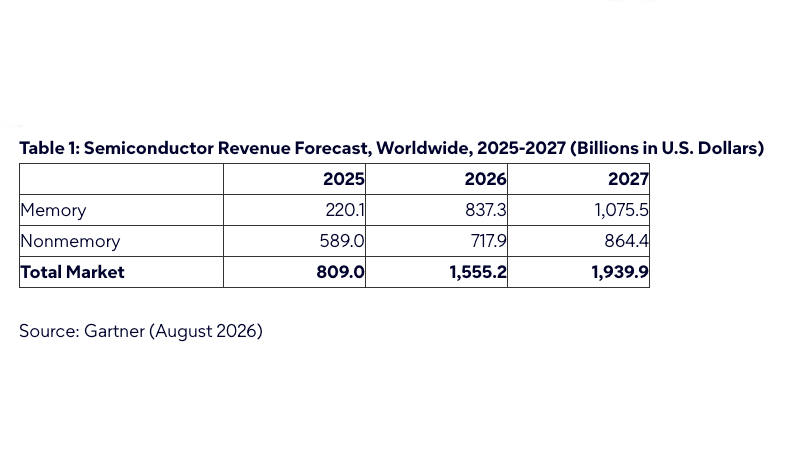
Gartner's latest forecast shows that "global semiconductor revenue is expected to reach US$1.555 trillion in 2026, up 92% from US$809 billion in 2025, and is projected to increase further to US$1.


