Micron Technology's planned Singapore expansion, driven by soaring AI memory demand, requires hundreds of transformers, signaling supply constraints that could affect global AI and semiconductor infrastructure timelines and costs for data-center buildouts, energy storage projects, and heavy electrical equipment suppliers, potentially reshaping procurement and construction schedules worldwide and logistics planning.
Micron's Singapore ramp-up reflects a broader industry response to the explosive growth in demand for high-bandwidth memory (HBM) in AI servers. Sources say the project will require 400 to 500 transformers, more than double the 100 to 150 units typically needed by standard wafer fabs, and exceeding the annual output capacity of any single Taiwanese transformer manufacturer. The scale underscores the massive power consumption associated with AI workloads and has turned transformer manufacturing into a critical battleground for semiconductor capacity expansion.
Major memory makers, including Micron, Samsung Electronics, and SK Hynix, have announced capacity expansions. Micron's overseas expansion plan includes a US$1.8 billion acquisition of PSMC's Miaoli Tongluo fab in Taiwan for 2026, new plants in Idaho and New York, and a Hiroshima facility expected to begin operations in the second half of 2026. In Singapore, Micron plans a US$24 billion investment to expand NAND capacity with production targeted to start in the second half of 2028.
The transformer shortfall and rising costs of copper and other raw materials have prompted heavy electrical equipment suppliers such as Fortune Electric and Allis Electric to implement price increases of 20 to 30%. Industry insiders familiar with transformer supply say the AI and semiconductor buildout wave is driving unprecedented demand and note that the scale of orders means no single maker can meet it alone.
Some manufacturers have declined to quote, citing the inability to meet tight timelines and large-scale capacity requirements. Observers say international transformer brands, despite commanding higher prices, benefit from larger overseas factories to boost output. At the same time, domestic leaders often collaborate with secondary suppliers to divide specifications and capacity to meet customer demands.


Stay up to date with the latest in industry offers by subscribing us. Our newsletter is your key to receiving expert tips.

As the memory chip shortage is expected to persist through 2027, independent smartphone and laptop manufacturers are being forced to redesign products, screen incoming chips for counterfeit or substan
Yageo posted year-over-year and month-over-month revenue growth in August, extending its streak of record monthly highs to a sixth straight month. The passive components maker said strong AI-related d
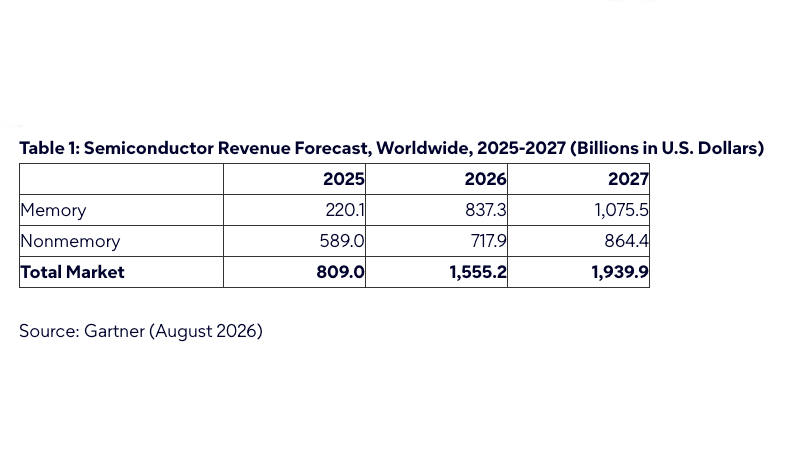
Gartner's latest forecast shows that "global semiconductor revenue is expected to reach US$1.555 trillion in 2026, up 92% from US$809 billion in 2025, and is projected to increase further to US$1.


