Texas Instruments (TI) reported robust results for the first quarter of 2026 on April 23, driven by surging AI data center demand and a notable rebound in industrial control applications. TI stressed that while industrial demand has yet to reach its previous peak, the current recovery trend is positive, signaling continued growth prospects ahead.
Regarding recent analog chip price increases, TI noted that first-quarter growth was largely unrelated to pricing changes. However, if market demand remains strong, the company does not rule out negotiating additional price hikes for specific customers or applications in the second half of 2026.
TI revealed that AI data center revenue grew over 25% quarter-over-quarter and approximately 90% year-over-year in the first quarter, reflecting sustained cloud AI momentum. Industrial control also posted more than 20% quarter-over-quarter and 30% year-over-year growth.
The company observed that industrial market expansion extends beyond popular sectors like energy infrastructure and aerospace defense, encompassing various submarkets, customer sizes, and regions. Particularly, small- and medium-sized long-tail customers are recovering from prolonged downturns, marking these segments as key growth drivers for the remainder of 2026.
On analog chip pricing trends, TI acknowledged upward pressure recently but stressed readiness to respond with supply capacity and a broad product portfolio while maintaining competitive pricing. The firm sees room to increase its analog market share in 2025.
Nonetheless, TI confirmed the possibility of further price increases in the second half of 2026, contingent on sustained market demand. If customer purchasing volumes continue rising, discussions about price adjustments will commence.
Most of TI's current pricing agreements were signed in the fourth quarter of 2025 when demand was weaker. Now, with chip supply tightening amid strong demand, customers seeking a guaranteed supply forms a basis for potential future price hikes.
However, TI highlighted that demand sustainability remains critical, noting past patterns where high demand in the first half of the year was followed by softening in the second half. The company plans to closely monitor market conditions moving forward.
TI is not alone in forecasting possible price rises later this year. Several Taiwanese mid-to-small IC design firms have already signaled intentions to raise prices in the second half of 2026, mainly due to escalating foundry and packaging costs, aiming to offset cost pressures.
This emerging consensus suggests that unless AI-related demand sharply declines, chip prices are poised to climb through the rest of 2026.


Stay up to date with the latest in industry offers by subscribing us. Our newsletter is your key to receiving expert tips.

As the memory chip shortage is expected to persist through 2027, independent smartphone and laptop manufacturers are being forced to redesign products, screen incoming chips for counterfeit or substan
Yageo posted year-over-year and month-over-month revenue growth in August, extending its streak of record monthly highs to a sixth straight month. The passive components maker said strong AI-related d
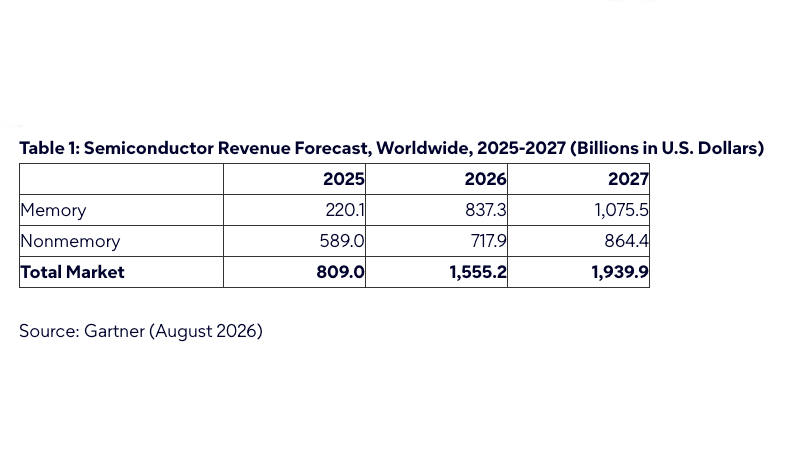
Gartner's latest forecast shows that "global semiconductor revenue is expected to reach US$1.555 trillion in 2026, up 92% from US$809 billion in 2025, and is projected to increase further to US$1.


