The devices will be called STM32C071, are scheduled to arrive by mid-2024, to be followed by 256kbyte flash STM32C091 models sampling later that year.
This is not to say that the company is deserting 8bit MCUs: “ST remains dedicated to its STM8 series,” it said. “Some companies need the eerprom available in our 8bit MCUs, while others depend on the AEC-Q10x automotive qualification of some of our devices.”
While the smallest 32C0 has 16kbyte flash and 6kbyte ram, STM32C071 will put 24kbyte of ram alongside its 128kbyte of flash.
“Products that had to adopt significantly more expensive devices because of memory constraints can now exist in entry-level markets and, because we anticipate a lot of these systems to use USB to deliver power, we added a crystal-less USB controller.”
Interfaces for SPI and I2C, and a 32bit timer will also be included. Pin-out similarities with the next-level-up STM32G0 series will be retained, said the company.
The processor remains the same: a 48MHz Arm Cortex-M0+ that scores 114 in the EEMBC CoreMark benchmark.
C0 series MCUs are planned in packages as small as 3 x 3mm 20pad QFN or WLCSP12. Mass quantities of STM32C0 devices are available today in packages including SO8N, TSSOP20, LQFP32 and LQFP48.


Stay up to date with the latest in industry offers by subscribing us. Our newsletter is your key to receiving expert tips.

As the memory chip shortage is expected to persist through 2027, independent smartphone and laptop manufacturers are being forced to redesign products, screen incoming chips for counterfeit or substan
Yageo posted year-over-year and month-over-month revenue growth in August, extending its streak of record monthly highs to a sixth straight month. The passive components maker said strong AI-related d
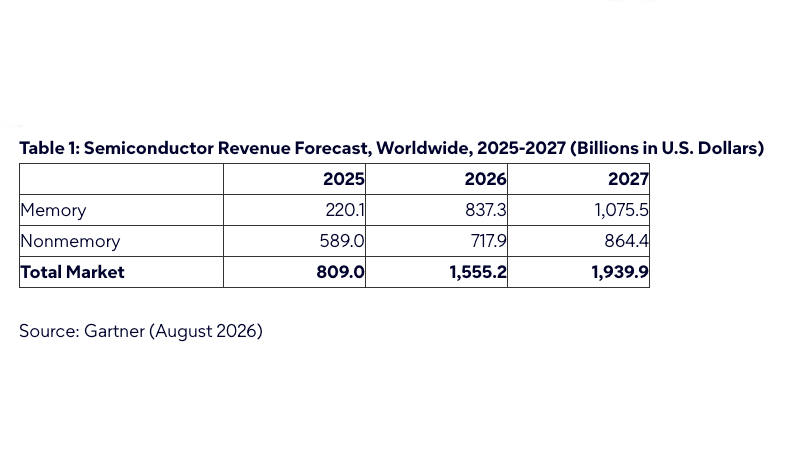
Gartner's latest forecast shows that "global semiconductor revenue is expected to reach US$1.555 trillion in 2026, up 92% from US$809 billion in 2025, and is projected to increase further to US$1.


