“Distributed aperture radar offers a path to enhance the resolution of radar systems while eliminating the need for thousands of antenna channels,” according to NXP. “It coherently fuses information from multiple radar sensors on a vehicle to create a larger effective antenna. The technology enables angular resolution below 0.5°, offering lidar-like performance for precise mapping of the environment – conventional radar sensors operate between 2 and 4°.”
The start-up is Zendar
“Distributed aperture radar technology is fundamentally early fusion from distributed radar modules,” said Zendar CEO and founder Vinayak Nagpal. “The lidar-like performance is a breakthrough for next-generation ADAS.”
Both cameras and lidar can be fooled by rain, fog and dusty conditions. Radar is immune to these, is less expensive, but has far lower resolution that might not reveal the shape of objects.
Zender concept combines the outputs of multiple inexpensive radar front-ends in a central computer, and claims that is can achieve 10x resolution compared with conventional radar, and it is able to “provide high fidelity information, enabling higher levels of autonomy and ADAS under all weather conditions.”
In the NXP case, the software will be implemented on NXP’s SAF8x ICs that combine multiple RF channels with microcontroller cores and specialist radar processing accelerators, and its S32R radar processors.
The combined ICs and software is being offered to vehicle OEMs and Tier 1 suppliers. “Application development can start immediately, and the launch is expected to be scheduled for next-generation OEM platforms,” said NXP.


Stay up to date with the latest in industry offers by subscribing us. Our newsletter is your key to receiving expert tips.

As the memory chip shortage is expected to persist through 2027, independent smartphone and laptop manufacturers are being forced to redesign products, screen incoming chips for counterfeit or substan

Yageo posted year-over-year and month-over-month revenue growth in August, extending its streak of record monthly highs to a sixth straight month. The passive components maker said strong AI-related d
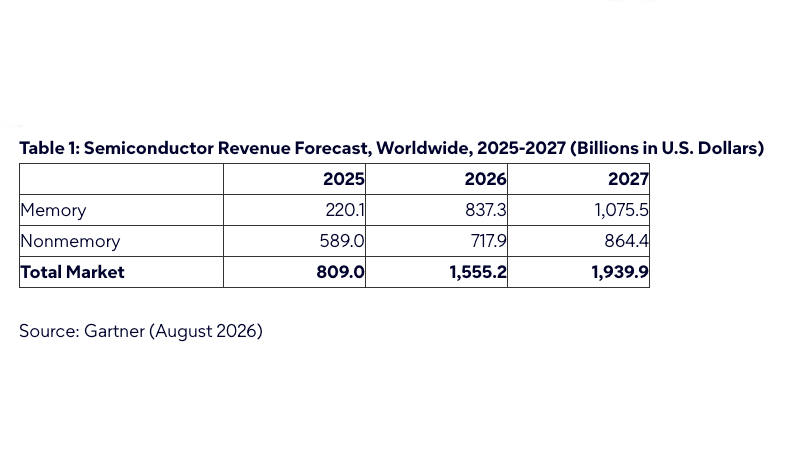
Gartner's latest forecast shows that "global semiconductor revenue is expected to reach US$1.555 trillion in 2026, up 92% from US$809 billion in 2025, and is projected to increase further to US$1.


