“Geopolitical shifts are fundamentally changing the semiconductor game,” says IDC’s Helen Chiang, “while immediate impacts might be subtle, long-term strategies are focusing more on supply chain self-reliance, security, and control. The industry operation will move from global collaborations to multi-regional competitions,”
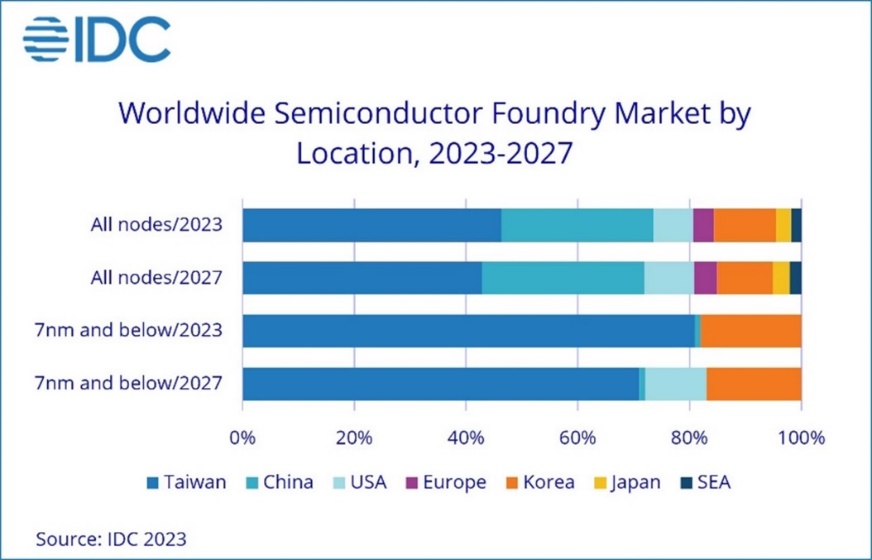
China’s rapid development of mature processes means its proportion of the foundry market will continue to increase, reaching 29% in 2027, an increase of 2% from 2023.
Taiwan’s proportion of the foundry market will fall from 46% in 2023 to 43% in 2027.
The US will make gains in advanced processes, and its share of the foundry market for 7nm and below is expected to reach 11% in 2027.
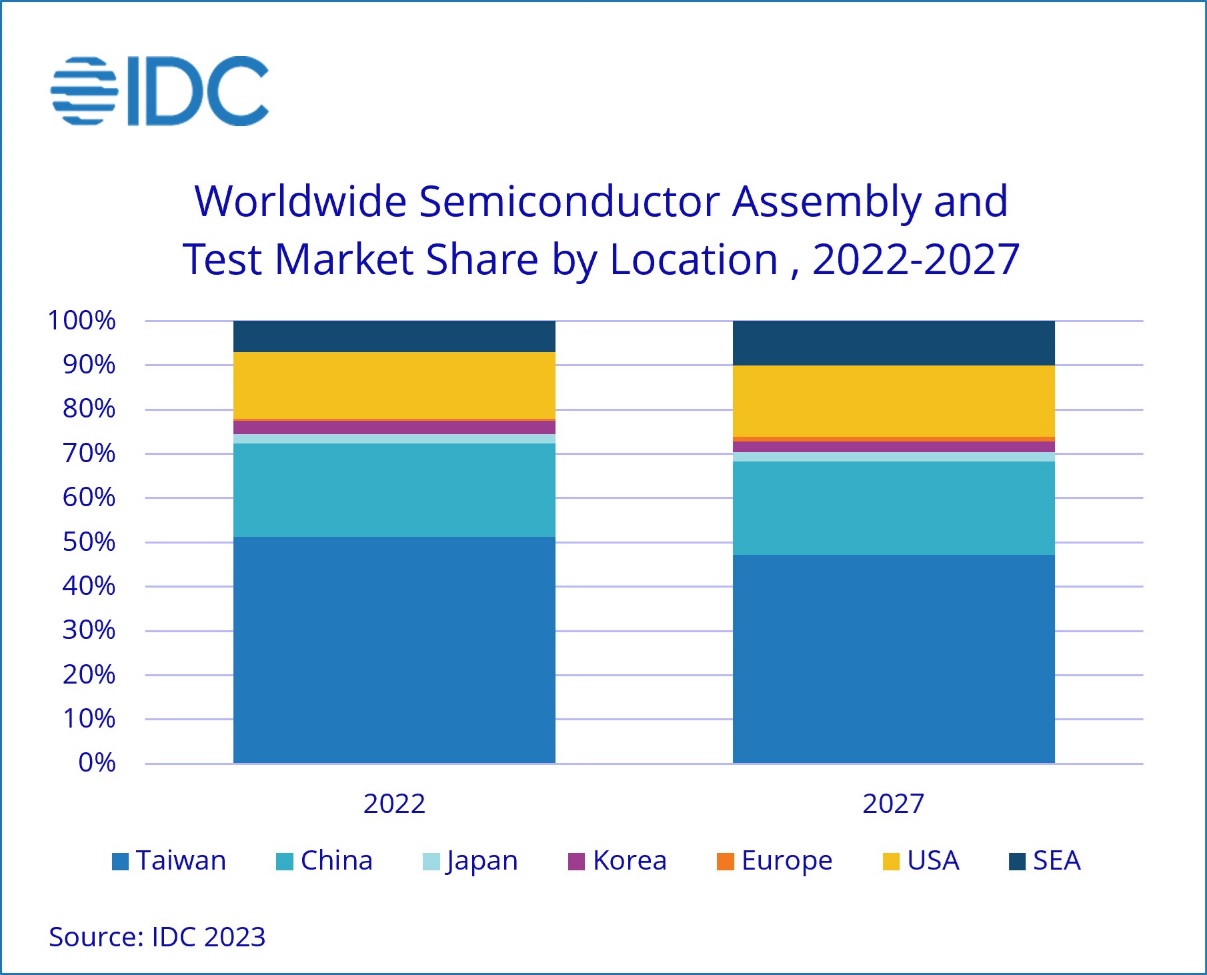
For assembly and test, IDMs have begun to invest more in the Southeast Asia market, and OSAT companies have begun to shift operations from China to Southeast Asia.
Southeast Asia is projected to play an increasingly important role in the semiconductor assembly and test market, especially in Malaysia and Vietnam.
Southeast Asia’s share of the global semiconductor assembly and test will reach 10% in 2027, while Taiwan’s share will decline to 47% in the same year from 51% in 2022.


Stay up to date with the latest in industry offers by subscribing us. Our newsletter is your key to receiving expert tips.

As the memory chip shortage is expected to persist through 2027, independent smartphone and laptop manufacturers are being forced to redesign products, screen incoming chips for counterfeit or substan
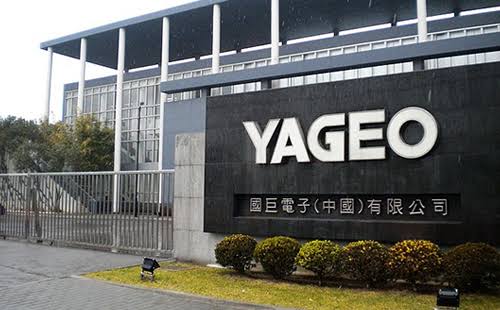
Yageo posted year-over-year and month-over-month revenue growth in August, extending its streak of record monthly highs to a sixth straight month. The passive components maker said strong AI-related d
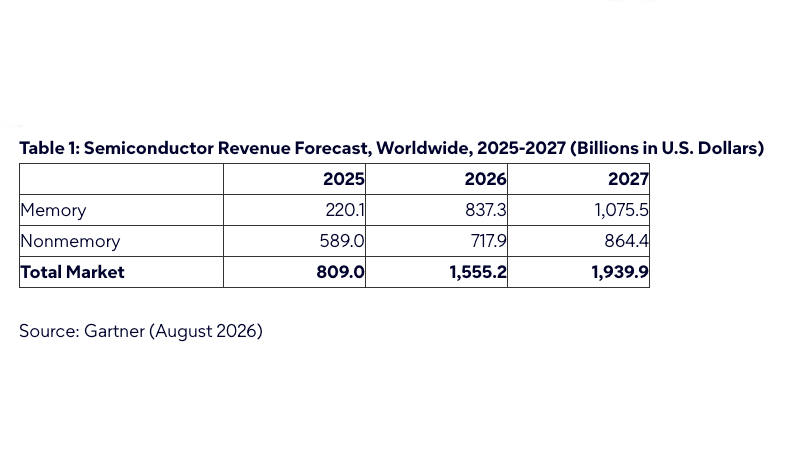
Gartner's latest forecast shows that "global semiconductor revenue is expected to reach US$1.555 trillion in 2026, up 92% from US$809 billion in 2025, and is projected to increase further to US$1.


