According to Yonhap News Agency, Samsung's dynamic random access memory (DRAM) sales fell 34.2% in the third quarter of this year from a year earlier against the backdrop of a cold market for memory chips due to the global economic downturn.
Market research agency Omdia data show that global DRAM sales in Q3 this year fell 29.8% from a year earlier to $17.548 billion. Analysts believe that the global economic recession has led to shrinking demand, combined with customer adjustments to inventory and falling prices, the semiconductor storage market has entered a full-scale winter.
Specifically, Samsung Q3 DRAM sales fell 34.2% to $7.133 billion, SK Hynix was $5.246 billion, down 25.3%, and Micron sales fell 26.3% to $4.35 billion.
According to a previous report released by Eugene Investment & Securities with little difference from Omdia, shows Q3 global DRAM market sales of $17.973 billion, down 29.3% from Q2's $25.427 billion. Samsung's Q3 market share fell to 41.0%, a record low in eight years.
source:aijiwei



Stay up to date with the latest in industry offers by subscribing us. Our newsletter is your key to receiving expert tips.

As the memory chip shortage is expected to persist through 2027, independent smartphone and laptop manufacturers are being forced to redesign products, screen incoming chips for counterfeit or substan

Yageo posted year-over-year and month-over-month revenue growth in August, extending its streak of record monthly highs to a sixth straight month. The passive components maker said strong AI-related d
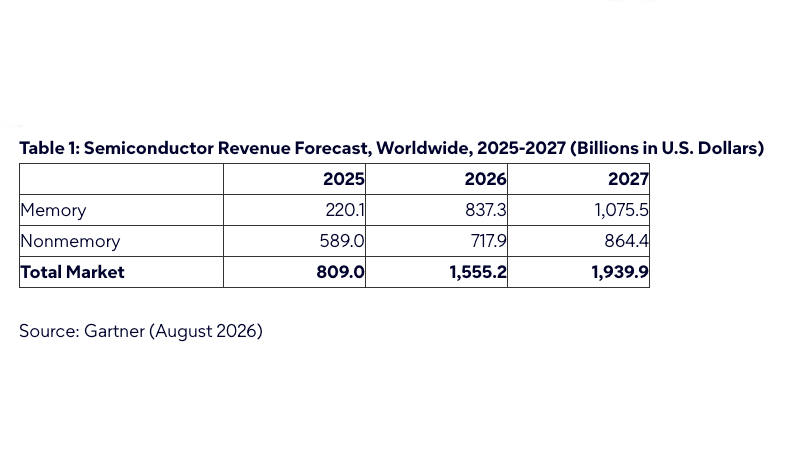
Gartner's latest forecast shows that "global semiconductor revenue is expected to reach US$1.555 trillion in 2026, up 92% from US$809 billion in 2025, and is projected to increase further to US$1.


