According to the Taiwan media "Electronic Times" reported, sources said that most of the car companies and semiconductor foundries 2023 price negotiations still have not reached agreement process "is not as smooth as expected".
Automotive supply chain sources pointed out that most car companies are still negotiating prices with foundries recently, from the core to TSMC, UMC, world advanced and other foundries are still negotiating, a small part is near the end. Foundries, IDMs and Tier 1 suppliers are considering whether they each need to take a step back, with manufacturing prices expected to increase by single-digit percentages in 2023.
For most in the automotive industry, negotiations are not going as well as expected, especially as fabs' automotive chip capacity growth remains unimpressive. Suppliers also hinted that the difficult part of the negotiations with fabs is to agree on advance payments, and both sides are not sure whether they should invest in a common future or just pay a deposit for the order.
For automakers, they want upfront payments to support investments by fabs to expand or convert their capacity to automotive use so that their supply can increase quickly. The automotive side can guarantee orders and deliveries, during which time the fab can maintain stable prices and expand into the industrial/automotive market. Simply put, the fabs want to build a long-term future that is mutually beneficial to both parties, represented by the mainstream IDM model, including Infineon, NXP, Renesas, Texas Instruments, STMicroelectronics or Tier 1.
With ongoing macro changes, especially inflation, likely to affect the market's spending power in 2023, the automotive industry is still searching for the best way to work together.
Source:aijiwei


Stay up to date with the latest in industry offers by subscribing us. Our newsletter is your key to receiving expert tips.

As the memory chip shortage is expected to persist through 2027, independent smartphone and laptop manufacturers are being forced to redesign products, screen incoming chips for counterfeit or substan
Yageo posted year-over-year and month-over-month revenue growth in August, extending its streak of record monthly highs to a sixth straight month. The passive components maker said strong AI-related d
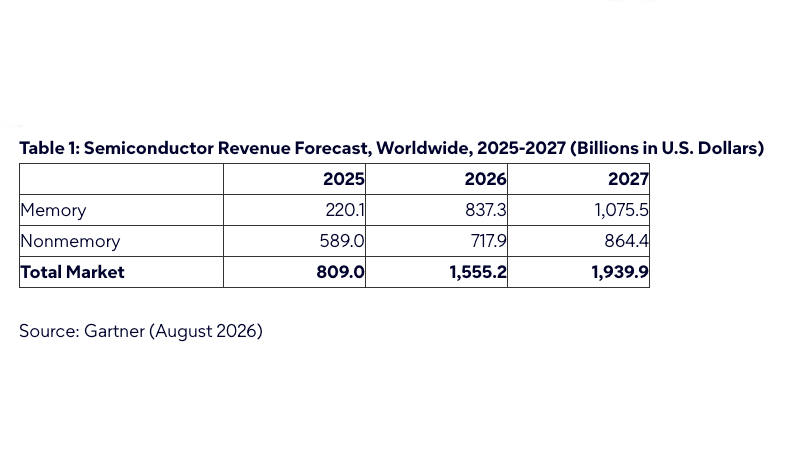
Gartner's latest forecast shows that "global semiconductor revenue is expected to reach US$1.555 trillion in 2026, up 92% from US$809 billion in 2025, and is projected to increase further to US$1.


