A few days ago, the U.S. stocks semiconductor chip stocks across the board plunged, including chip stocks in the IT sector fell more than 4%, while chip stocks in AMD is a plunge of nearly 14%.
According to AMD announced preliminary financial results for the third quarter, AMD's third-quarter revenue is expected to be about $5.6 billion (about $39.8 billion), an increase of 29% year-on-year. But this performance is much lower than previously expected, AMD previously said Q3 quarter revenue is expected to grow about 55% year-on-year.
The reason given by AMD for the decline in performance is that "macroeconomic contraction led to less than expected sales in the traditional PC consumer market, accompanied by a large inventory in the supply chain, so the overall market is not very enthusiastic about the installation, resulting in a significant reduction in processor shipments."
The report also noted that the company's processor shipments were significantly lower due to weaker-than-expected PC market and inventory backlogs in the supply chain, and that revenue from the personal user (Client) segment was lower than expected, falling 53 percent sequentially and 40 percent year-over-year.
Previously, prior to the release of the report, AMD had expected to bring in $6.7 billion in revenue, but revenue will be $1.1 billion lower than expected, now at $5.6 billion, mainly due to a decline in desktop and notebook computer CPU sales.
It is reported that a report by market research firm Canalys shows that the U.S. economy is facing a looming recession and high inflation, making shipments to the U.S. PC market fall by more than 20% year-on-year in the second quarter of this year.
source:icspec


Stay up to date with the latest in industry offers by subscribing us. Our newsletter is your key to receiving expert tips.

As the memory chip shortage is expected to persist through 2027, independent smartphone and laptop manufacturers are being forced to redesign products, screen incoming chips for counterfeit or substan

Yageo posted year-over-year and month-over-month revenue growth in August, extending its streak of record monthly highs to a sixth straight month. The passive components maker said strong AI-related d
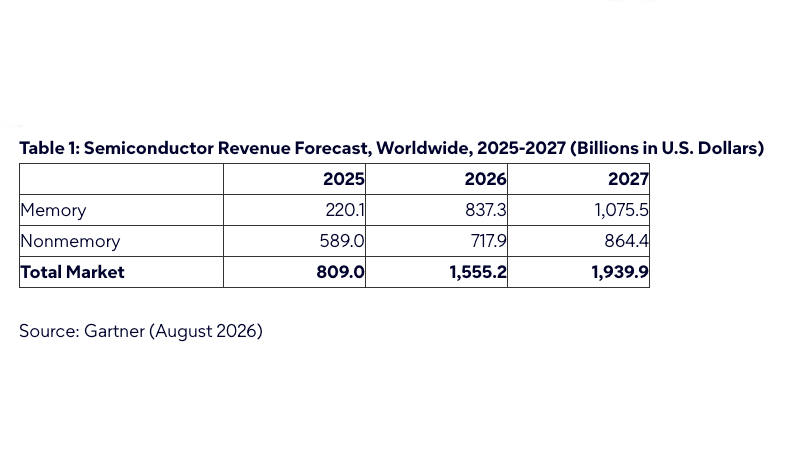
Gartner's latest forecast shows that "global semiconductor revenue is expected to reach US$1.555 trillion in 2026, up 92% from US$809 billion in 2025, and is projected to increase further to US$1.


