According to Taiwan Economic Daily, due to the global shortage of network communication chips and the surging chip price of the U.S. leading manufacturers, customers cannot get their chips as scheduled even if they accept the increased price. Therefore, some telecom customers in Europe and America asked the Netcom factories to change the terminal designs and transfer to the chips produced by MediaTek and Realtek.
Industrial insiders revealed that the telecom industry previously adopted the chips produced by the U.S. leading manufacturers, and the communications operators were responsible for the design and manufacturing of xDSL, client optical fibers, IAD integration devices, IP STBs, etc. But recently, some customers have been impatient with the leading manufacturers who raise prices but cannot deliver products. They have transferred to the chips manufactured by MediaTek, Realtek, etc.
MediaTek responded that they would not comment on the orders placed by customers. At the same time, Realtek said it would continuously optimize product portfolios to cooperate with more customers.
Industrial insiders pointed out that the situation that leading international chipmakers delay deliveries and focus on more advanced products gives the manufacturers like MediaTek opportunities. Since the beginning of this year, some manufacturers have been unwilling to wait for the delivery of the leading chipmakers and considered transferring to other chips. Still, it is estimated that they won’t get their new chips until the second half of this year.
Source from TechWeb


Stay up to date with the latest in industry offers by subscribing us. Our newsletter is your key to receiving expert tips.

As the memory chip shortage is expected to persist through 2027, independent smartphone and laptop manufacturers are being forced to redesign products, screen incoming chips for counterfeit or substan

Yageo posted year-over-year and month-over-month revenue growth in August, extending its streak of record monthly highs to a sixth straight month. The passive components maker said strong AI-related d
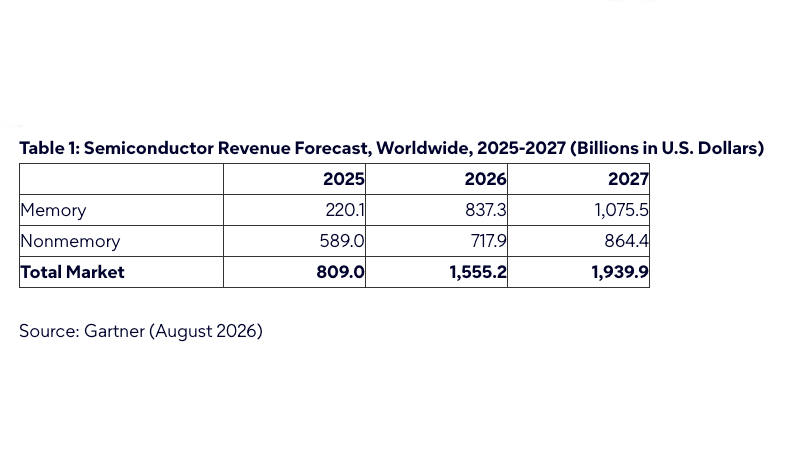
Gartner's latest forecast shows that "global semiconductor revenue is expected to reach US$1.555 trillion in 2026, up 92% from US$809 billion in 2025, and is projected to increase further to US$1.


