The two-year chip shortage has only influenced the low-end chips so far, but that could change as semiconductor manufacturers struggle to get the equipment to manufacture more advanced processors.
The report points out that the supply gap of advanced chips is likely to reach 20% by 2024, which will have a knock-on effect on the relevant industries such as AI, high-performing computing, and self-driving cars.
Due to technical obstacles and the huge investment required, only two chip-makers, TSMC and Samsung, have the ability to produce high-end chips.
In some cases, the delivery period of new orders has been extended by two to three years. An industry insider revealed that some customers of TSMC have received warnings that equipment procurement problems may prevent the company from increasing production in the next two years.
In the face of these challenges, both TSMC and Samsung Electronics stated that they were working to avoid interference in chip production.

Source from ECCN


Stay up to date with the latest in industry offers by subscribing us. Our newsletter is your key to receiving expert tips.

As the memory chip shortage is expected to persist through 2027, independent smartphone and laptop manufacturers are being forced to redesign products, screen incoming chips for counterfeit or substan
Yageo posted year-over-year and month-over-month revenue growth in August, extending its streak of record monthly highs to a sixth straight month. The passive components maker said strong AI-related d
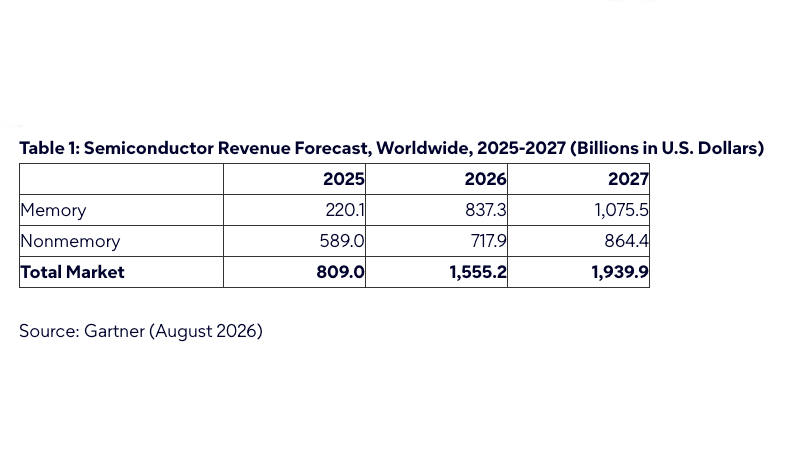
Gartner's latest forecast shows that "global semiconductor revenue is expected to reach US$1.555 trillion in 2026, up 92% from US$809 billion in 2025, and is projected to increase further to US$1.


