Global semiconductor revenues will exceed $1tn in 2026, marking a historic milestone for the industry, according to Omdia's latest market analysis. This growth is being driven by the rapid surge in memory and logic IC revenues, generated by massive demand from AI market. The semiconductor revenue forecast for 2025 increased significantly to 20.3% year-over-year (YoY), reflecting stronger-than-anticipated 3Q25 results, and robust growth expected in 4Q25. Revenue growth in DRAM and NAND memory ICs will remain unprecedented, supported by strong expansion in Logic ICs, bringing the 2026 market forecast to 30.7% YoY.
Computing & Data Storage will lead all segments in semiconductor revenue growth rising 41.4% YoY in 2026 to exceed $500bn, due to high demand in data center servers and other memory-intensive applications, as well as higher memory IC pricing. Notebook PC growth is being fueled by AI-capable adoption and a large-scale enterprise refresh cycle. Collectively, the top four hyperscalers are expected to spend approximately $500bn on capital expenditures this year, with further growth expected. Capital spending is being reallocated toward AI infrastructure, model development, and emerging applications, highlighting the transformative impact of AI across sectors.
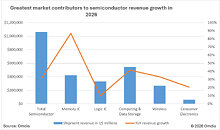
Consumer electronics and wireless applications also present a strong outlook for semiconductor revenue growth in 2026. Contributing factors include inflated memory pricing, the launch of next-generation foldable smartphones, and renewed strength in connected consumer devices. Upgrades in AI photography and flagship smartphone refreshes from Apple, Samsung, and other manufacturers will further support growth. Wearables, smart speakers, and virtual reality (VR) headsets are also projected to see meaningful revenue gains.
Looking Ahead
"Semiconductor revenue growth in 2026 is being driven by highly concentrated, AI-related demand, rather than broad-based consumer behavior or industrial production trends that have historically influenced the market. Without the contributions of memory and logic ICs, overall semiconductor revenue growth would fall from 30.7% to only 8%, highlighting the nature of the demand driving recent market surges," said Myson Robles-Bruce, Senior Principal Analyst at Omdia.
To provide a balanced forecast, Omdia has identified several macroeconomic risk factors that could temper growth in 2026. While inflation in China and the Eurozone remains largely under control, it continues to be a concern in the US. Additional challenges this year are expected to include rising labor and energy costs, supply chain disruptions from reorganization and governmental policies, and shortages or price volatility resulting from large-scale AI-related investments.


Stay up to date with the latest in industry offers by subscribing us. Our newsletter is your key to receiving expert tips.

As the memory chip shortage is expected to persist through 2027, independent smartphone and laptop manufacturers are being forced to redesign products, screen incoming chips for counterfeit or substan

Yageo posted year-over-year and month-over-month revenue growth in August, extending its streak of record monthly highs to a sixth straight month. The passive components maker said strong AI-related d
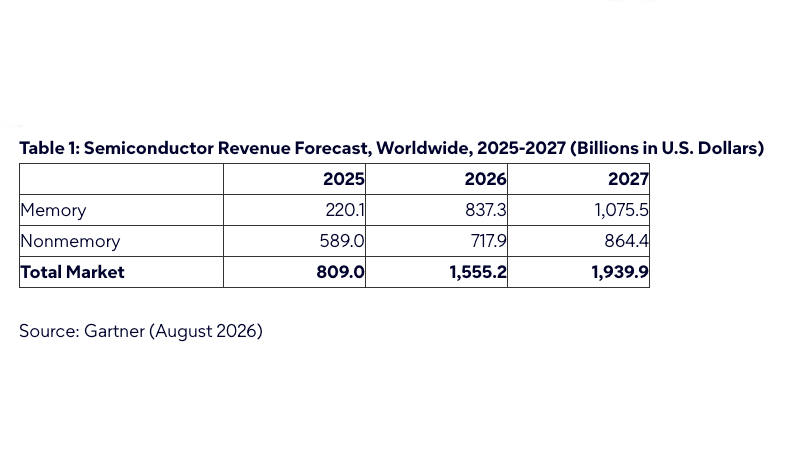
Gartner's latest forecast shows that "global semiconductor revenue is expected to reach US$1.555 trillion in 2026, up 92% from US$809 billion in 2025, and is projected to increase further to US$1.


