Samsung Electronics forecast a gradual second-half recovery for its chips business after second-quarter operating profit at the division plunged 94% from a year earlier due to shipment delays and U.S. export curbs on advanced semiconductor sales to China.
The South Korean tech giant said on Thursday it expected the industry environment would improve in the second half, driven by artificial intelligence demand due to continued investments by major cloud service providers.
But hours after U.S. President Donald Trump announced he would place 15% tariffs on South Korean goods, Samsung added there were concerns about slowing global growth due to an uncertain trade environment and geopolitical risks.
The world’s largest memory chip maker posted 4.7 trillion won in operating profit for the April-June period, its weakest in six quarters and roughly in line with an earlier estimate that had disappointed investors.
Its revenue rose 0.7% to 74.6 trillion won, in line with its earlier estimate of 74 trillion won.
Samsung’s chip division posted a profit of 400 billion won during the quarter, down from 6.5 trillion won a year earlier, marking the first time in six quarters that the figure has dropped below the 1 trillion won mark.
Samsung said in a statement that inventory value adjustments to memory chips and one-off costs from the impact of U.S. export restrictions on sales to China on its contract chipmaking business lowered the division’s profit.
Prolonged weakness in its financial performance has deepened investor concerns over the South Korean tech giant’s ability to catch up with smaller rivals in developing high-bandwidth memory chips sold to customers including Nvidia and used in AI data centres.
But Samsung reported earnings just days after Tesla said it had signed a $16.5 billion deal to source chips from the tech giant, a move that could bolster the South Korean company’s struggling foundry business that makes chips on contract.
Major tech companies Meta Platforms and Microsoft on Wednesday pointed to strong AI chip demand and major investments in data centres in their earnings announcements.


Stay up to date with the latest in industry offers by subscribing us. Our newsletter is your key to receiving expert tips.

As the memory chip shortage is expected to persist through 2027, independent smartphone and laptop manufacturers are being forced to redesign products, screen incoming chips for counterfeit or substan
Yageo posted year-over-year and month-over-month revenue growth in August, extending its streak of record monthly highs to a sixth straight month. The passive components maker said strong AI-related d
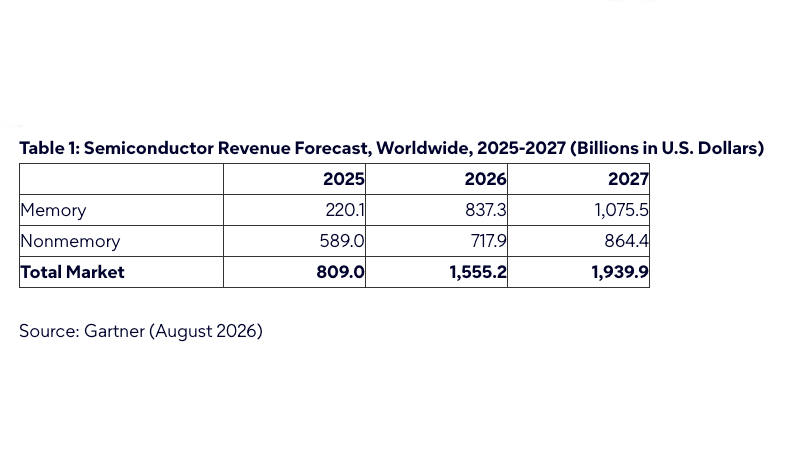
Gartner's latest forecast shows that "global semiconductor revenue is expected to reach US$1.555 trillion in 2026, up 92% from US$809 billion in 2025, and is projected to increase further to US$1.


