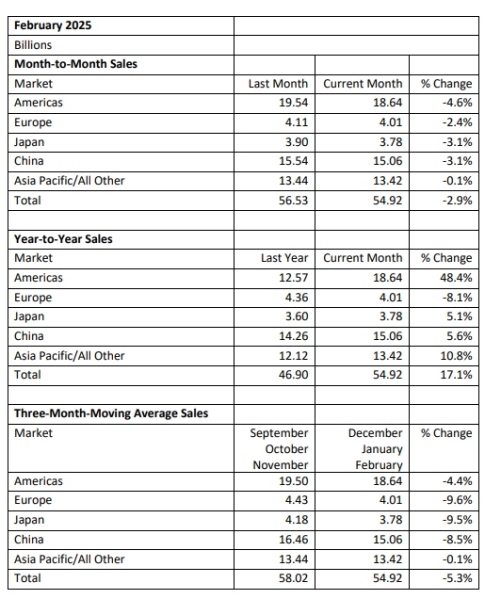
According to new figures from the Semiconductor Industry Association (SIA), global semiconductor sales were $54.9 billion during the month of February 2025.
Global semiconductor sales increase Credit: vxnaghiyev - adobe.stock.com
That total represented an increase of 17.1% compared to February 2024’s total of $46.9 billion but was a fall of 2.9% on January 2025’s total of $56.5 billion.
“Despite a slight decline in month-to-month sales, the global semiconductor industry hit its highest-ever monthly sales total for the month of February, driving strong year-to-year growth,” said John Neuffer, SIA president and CEO. “Year-to-year sales increased by more than 17% for the 10th consecutive month, driven by a year-to-year sales increase of nearly 50% in the Americas.”
Regionally, year-to-year sales were up in the Americas (48.4%), Asia Pacific/All Other (10.8%), China (5.6%), and Japan (5.1%), but down in Europe (-8.1%). Month-to-month sales in February decreased in Asia Pacific/All Other (-0.1%), Europe (-2.4%), China (-3.1%), Japan (-3.1%), and the Americas (-4.6%).
Monthly sales are compiled by the World Semiconductor Trade Statistics (WSTS) organisation and represent a three-month moving average. SIA represents 99% of the U.S. semiconductor industry by revenue and nearly two-thirds of non-U.S. chip firms.


Stay up to date with the latest in industry offers by subscribing us. Our newsletter is your key to receiving expert tips.

As the memory chip shortage is expected to persist through 2027, independent smartphone and laptop manufacturers are being forced to redesign products, screen incoming chips for counterfeit or substan
Yageo posted year-over-year and month-over-month revenue growth in August, extending its streak of record monthly highs to a sixth straight month. The passive components maker said strong AI-related d
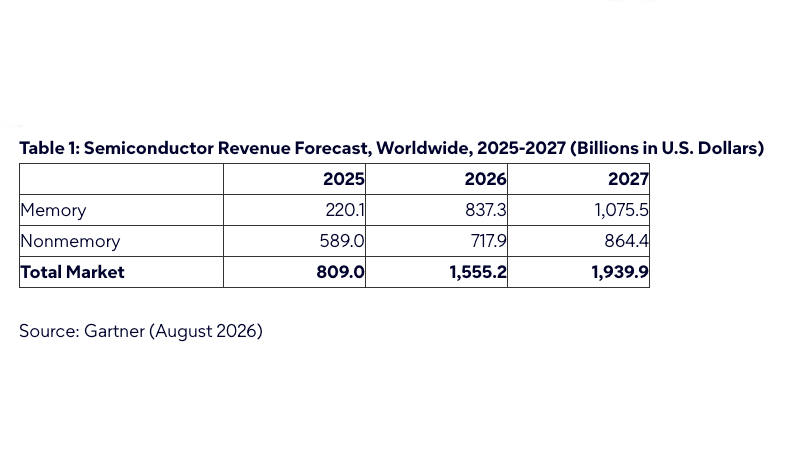
Gartner's latest forecast shows that "global semiconductor revenue is expected to reach US$1.555 trillion in 2026, up 92% from US$809 billion in 2025, and is projected to increase further to US$1.


