On July 28, EST, the U.S. House of Representatives passed the "Chip and Science Act" to subsidize the U.S. semiconductor chip manufacturing industry.
In this regard, the market research agency TrendForce predicts that the 7nm (including) the following advanced process capacity, to 2025, China Taiwan accounted for about 69%, China 1%, South Korea 18%, the United States 12%.
In terms of global 12-inch production capacity by region, by 2025, Taiwan will account for 43%, followed by mainland China 27%, the United States 8%, and South Korea 12%. Compared with the pattern in 2022, it is clear that the U.S. will increase the proportion of advanced process capacity in the next three years, while mainland China will be the main axis of the mature process.

It is understood that the bill, which has undergone several redactions, was finally named the "Chip and Science Act," which will provide about $52 billion in government subsidy funds for U.S. semiconductor manufacturing and $24 billion worth of investment tax credits for chip factories, and is expected to fund 10 to 15 new semiconductor factories in the next decade. It also includes more than $170 billion over five years to authorize the National Science Foundation, the U.S. Department of Commerce and others to increase investments in science and technology research and development in key areas to promote scientific research in the United States.
In addition, TrendForce pointed out that in addition to actively cultivating domestic production lines through the chip bill, the U.S. has frequently sought to increase the intensity and depth of sanctions against mainland China's semiconductors to curb their development through additional restrictions, in line with the entity list ban that had been in place for several years before the epidemic.
Source from:ITzhijia


Stay up to date with the latest in industry offers by subscribing us. Our newsletter is your key to receiving expert tips.

As the memory chip shortage is expected to persist through 2027, independent smartphone and laptop manufacturers are being forced to redesign products, screen incoming chips for counterfeit or substan

Yageo posted year-over-year and month-over-month revenue growth in August, extending its streak of record monthly highs to a sixth straight month. The passive components maker said strong AI-related d
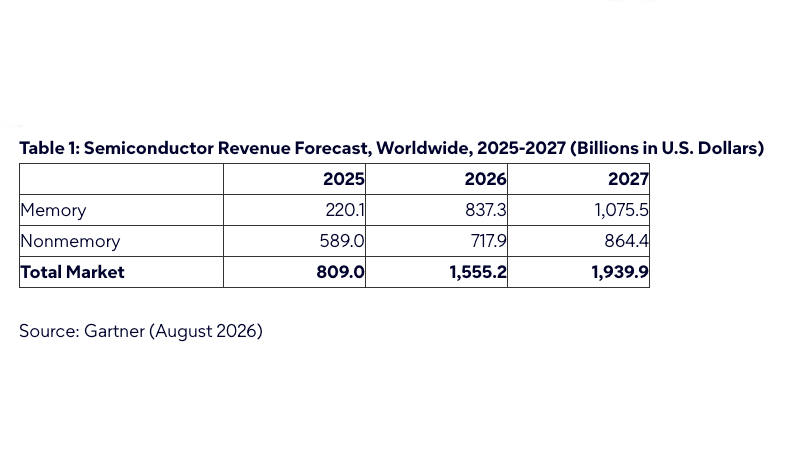
Gartner's latest forecast shows that "global semiconductor revenue is expected to reach US$1.555 trillion in 2026, up 92% from US$809 billion in 2025, and is projected to increase further to US$1.


