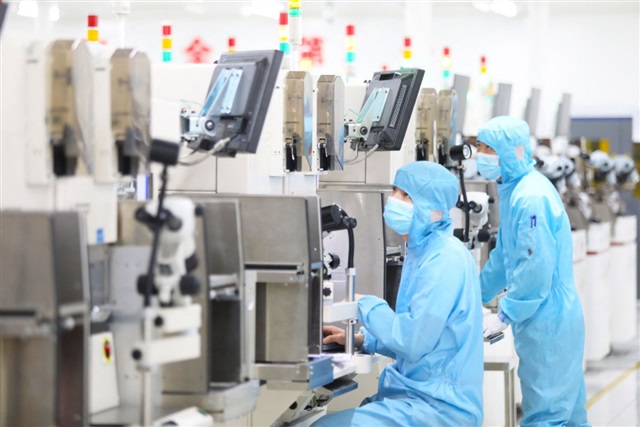
China's semiconductor equipment purchases are expected to decline in 2025 after three years of growth, according to Canadian research firm TechInsights. The decline comes amid industry overcapacity and intensified US export controls.
China dominated global semiconductor equipment purchases for the past two years, spending US$41 billion and capturing 40% of global sales in 2024. The country served as the primary growth driver for the wafer fabrication equipment market in both 2023 and 2024.
TechInsights senior semiconductor manufacturing analyst Boris Metodiev forecasts China's semiconductor equipment spending will decrease to US$38 billion in 2025, marking a 6% decline. Its global market share is expected to drop to 20%, representing the first contraction since 2021, as reported by Yahoo Finance.
"We can see some slowdown in Chinese spending due to export controls and overcapacity," Metodiev noted.
Industry grapples with overcapacity concerns
DIGITIMES reported in December that China's semiconductor industry faces a potential downturn in 2025 due to wafer fab overcapacity. As a crucial semiconductor equipment market, China's slowdown will likely force major international suppliers to revise their business strategies.
ASML reported that China comprised 47% of its revenue in the third quarter of 2024, but projects this figure to decrease to 20% in 2025. Other major equipment manufacturers have also forecast sharp revenue declines in China for the coming year.
KLA Chief Financial Officer Bren Higgins cautioned that China's revenue share will fall to 20% in 2025, indicating mounting pressure for business restructuring.
Chinese research firm ICwise predicts continued overcapacity in China's semiconductor industry throughout 2025, leading to slower capacity expansion and reduced demand for upstream equipment.
US sanctions spark equipment stockpiling
China drove global wafer fabrication equipment growth in 2023 and 2024, even as the broader market declined due to weak consumer electronics demand.
To counter US sanctions restricting access to advanced chipmaking tools, China aggressively accumulated semiconductor equipment over the past three years, according to Yahoo Finance.
Despite US sanctions, Chinese chipmakers SMIC and Huawei advanced their technology capabilities, producing a high-end chip last year through more expensive and complex processes.
Chinese manufacturers increased mature-node chip production to gain market share from Taiwanese competitors. On February 12, 2025, SMIC warned of oversupply risks in this segment, Reuters reports.


Stay up to date with the latest in industry offers by subscribing us. Our newsletter is your key to receiving expert tips.

As the memory chip shortage is expected to persist through 2027, independent smartphone and laptop manufacturers are being forced to redesign products, screen incoming chips for counterfeit or substan
Yageo posted year-over-year and month-over-month revenue growth in August, extending its streak of record monthly highs to a sixth straight month. The passive components maker said strong AI-related d
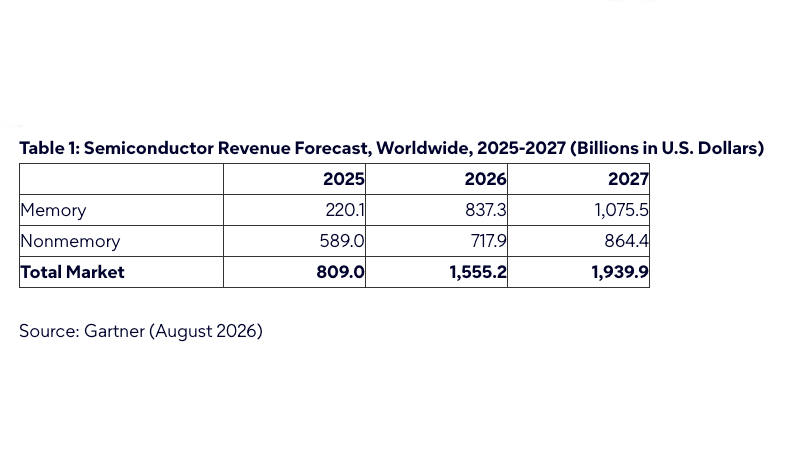
Gartner's latest forecast shows that "global semiconductor revenue is expected to reach US$1.555 trillion in 2026, up 92% from US$809 billion in 2025, and is projected to increase further to US$1.


